
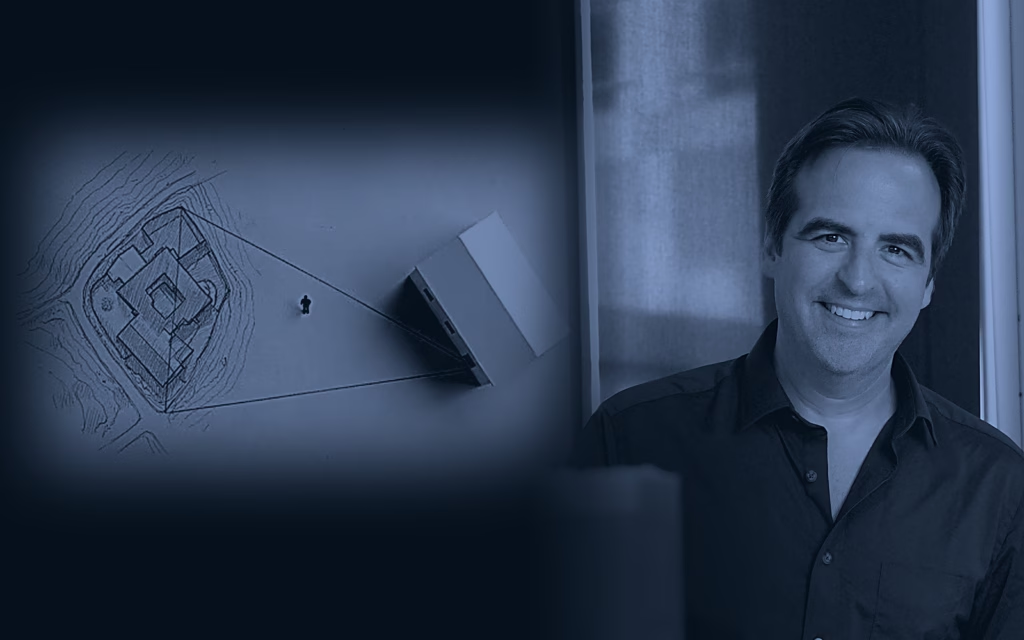
Most architects give away their most valuable thinking before they are ever hired. Ricardo Álvarez-Díaz, FAIA, calls that unpaid knowledge “the delta,” and he has built a practice around charging for it.
In this conversation with DFC Director Laura Spells, the co-founder of Álvarez-Díaz & Villalón explains why he left Robert A.M. Stern’s New York office in the 1990s to return to Puerto Rico, how his firm went from about 50 people to 27 while revenue went up, why he teaches real estate development to his entire staff, and why he trained an AI version of himself on 25 years of his own writing and teaching.
Watch the full conversation between Ricardo and Laura below, then read what we heard.
What We Heard from Ricardo Álvarez-Díaz
The delta is the work before the work. Architects spend time and energy advising clients in hopes of winning the commission, and they often arrive after the land, program and pro forma are already set.
“That delta needs to be valued. And it is our own fault, by the way. Many times the clients are ready to value it, but there’s some fear involved.”
Ricardo Álvarez-Díaz, FAIA
His first step was simple: before continuing the conversation, he sent an hourly proposal to help the client define the architect’s scope. The client said yes.
Smaller can be stronger. When staff left and some projects went on hold, the firm held off on hiring. New tools absorbed tasks, and the team became more focused. “What we’ve gained was agility, we’ve gained clarity, and at the end that became profitability,” he says.
Everyone learns the business. Ricardo teaches his university courses on real estate development to the whole company, not only the designers. The point is not to turn everyone into a developer. He wants every person, from HR to the drafter, to understand what the firm is working toward: the decisions behind each project and their implications, financial as well as social.
AI raises the value of judgment. He worries less about experienced professionals and more about students who reach for answers before thinking. “If you don’t know a question, you don’t know how to identify an answer.” Three quarters of his employees are licensed. He sees growing demand for seasoned architects and shrinking demand for entry-level hires at small firms, unless architecture education broadens into business, real estate and communication.
Design is a service. Asked what he would want his firm to keep if the technology disappeared tomorrow, he did not hesitate.
“Design is a service. Not ego, not awards, not recognition. It’s service.”
Ricardo Álvarez-Díaz, FAIA
Architects as builders. Looking five to ten years ahead, he argues for a broader definition of the architect: “…if we start seeing ourselves as builders instead of only architects, we will actually potentially have an opportunity to take ownership of things that we’ve let go.”